FILM STUDIO MYSTERY TUTORIAL
A strong mystery short needs more than a mysterious visual. Give Film Studio a consistent cast, a clue the camera can return to, a controlled setting, escalating dialogue, and a reveal that changes what the audience thinks.
Story Concept
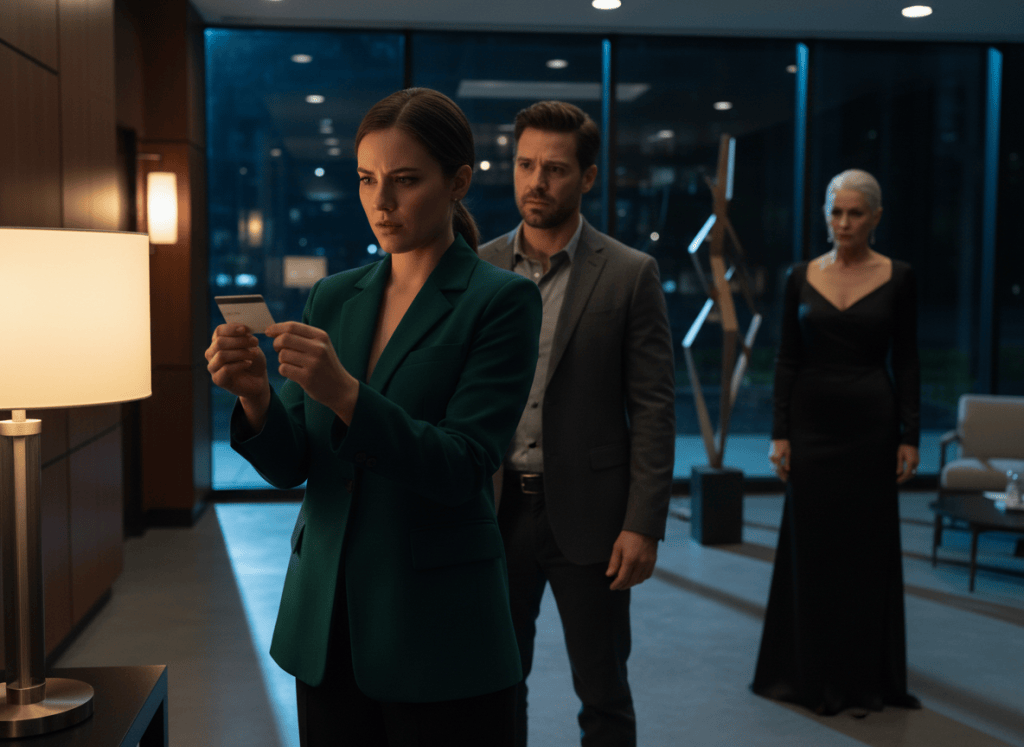
Maya discovers a keycard connected to a part of her past she does not understand. Jordan helps her investigate while Evelyn, an elegant older woman, watches from a distance and appears to know exactly what the key opens.
Build Your Characters
- Maya — early 30s, dark curly hair, green blazer; intelligent, tense and determined.
- Jordan — casual dark clothing; loyal, skeptical and emotionally grounded.
- Evelyn — elegant older woman in black; calm, controlled and quietly intimidating.
Scene Plan
- Opening: close-up of the keycard as Maya realizes it should not be in her possession.
- Investigation: Maya and Jordan study the clue and decide to follow it.
- Escalation: they enter the location connected to the card and realize someone is watching.
- Reveal: Evelyn steps forward and says something that reframes the mystery.
- Ending: finish on Maya’s reaction or a final visual clue that leaves one question unanswered.
Example Dialogue
- Maya: “This wasn’t supposed to come back to me.”
- Jordan: “Then tell me why your hands are shaking.”
- Evelyn: “You were never meant to find that key.”
Visual & Camera Direction
- Open with an object close-up, then reveal the characters.
- Use medium dialogue shots and reaction close-ups to build tension.
- Keep wardrobe and facial identity consistent in every scene.
- Use a slow push-in for the final reveal instead of frantic camera movement.
Build the Mystery One Scene at a Time
Do not treat every Film Studio scene as a brand-new prompt. Think of Scene 1 as the baseline, then let every later scene inherit what is already true and change only what needs to advance the story. That is how the film begins to feel continuous instead of like five unrelated clips.
Use the Scene-Inheritance Rule
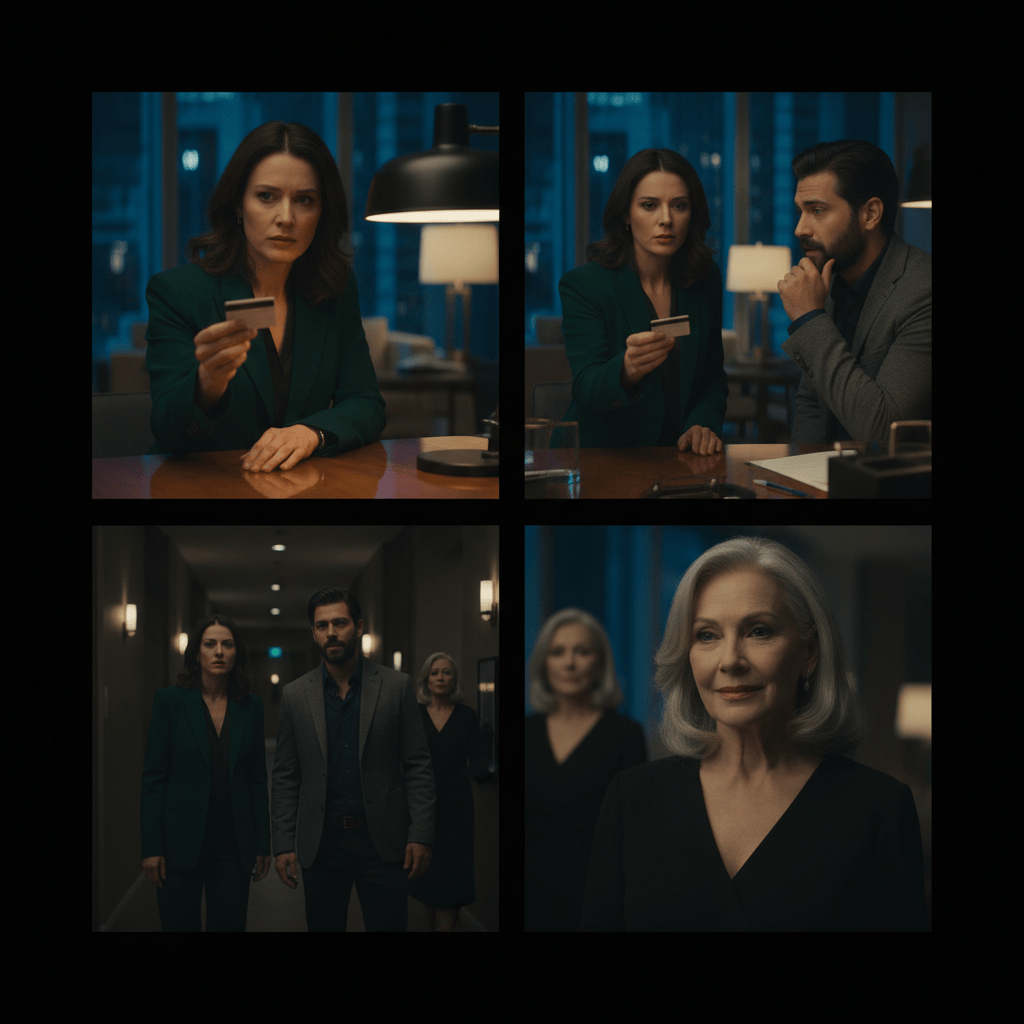
Before writing the next scene, identify three things: what must carry forward, what changes now, and what new question or decision pushes us into the following scene. For this mystery, the keycard is not just a prop—it is the visual thread connecting the entire sequence.
| Scene | Carry Forward | Add in This Scene | Exit Beat |
|---|---|---|---|
| 1 · Discovery | Maya, green blazer, lobby, keycard | She realizes the card should not be there | She decides to show Jordan |
| 2 · Investigation | Same Maya, same card, same night | Jordan questions what it could open | They choose to follow the clue |
| 3 · Escalation | Wardrobe, card, emotional tension | Hallway location and sense of being watched | They notice Evelyn |
| 4 · Reveal | All character identities and clue history | Evelyn steps forward with new information | Maya’s understanding changes |
| 5 · Aftershock | The reveal and keycard meaning | One final visual clue or reaction | End on one strong unanswered question |
Lock Continuity Before You Add More Action
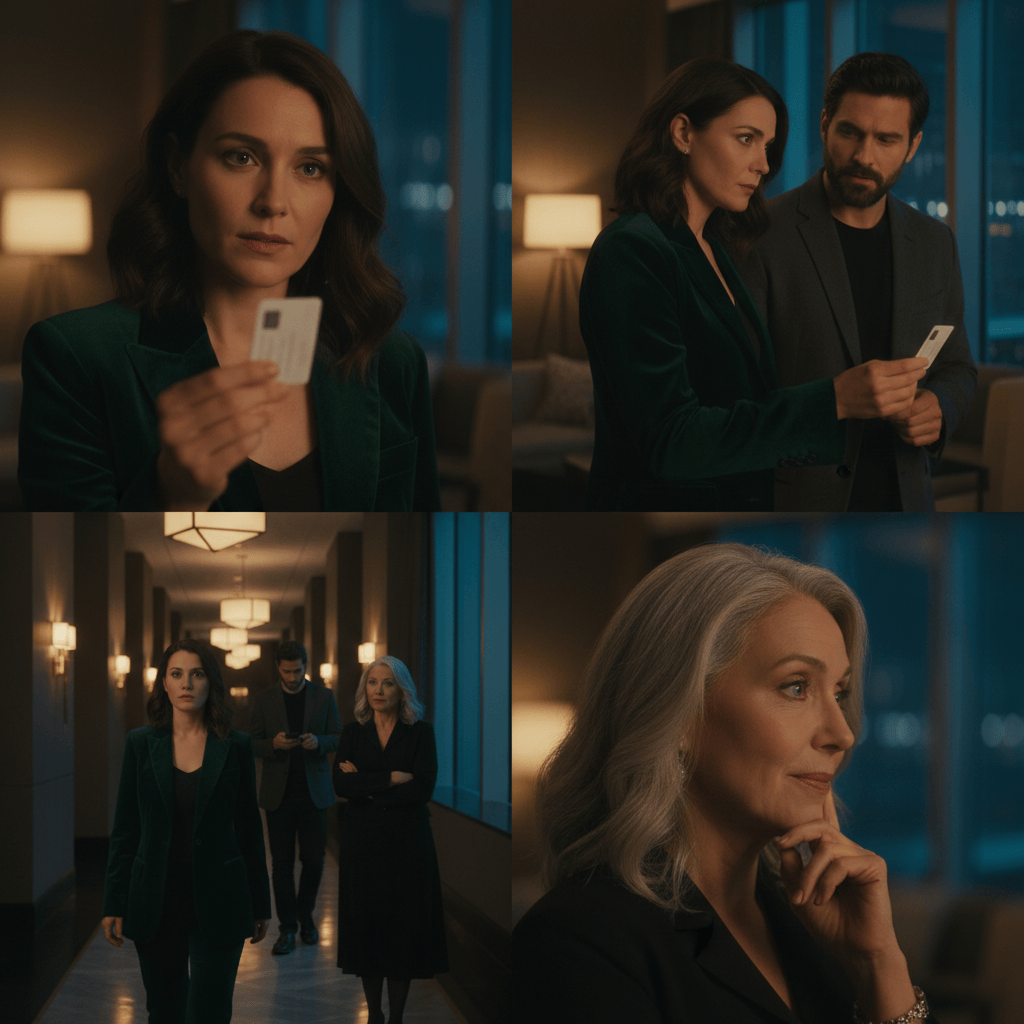
- Identity lock: repeat Maya’s age range, hair, face and defining wardrobe in every scene prompt.
- Prop lock: keep the same keycard design, condition and handoff history.
- Location lock: if Scene 2 begins moments after Scene 1, preserve the same lobby lighting, time of night and spatial layout.
- Emotion lock: Scene 2 should begin from the emotion Scene 1 ended on—not reset Maya to neutral.
- Knowledge lock: characters should remember what they learned earlier. Do not make them rediscover the same clue.
Stack the Prompt Instead of Restarting
- Write Scene 1 fully: character identity, wardrobe, location, lighting, object, objective and camera.
- For Scene 2, begin with inheritance: “Continue immediately from the previous scene. Preserve Maya’s face, green blazer, keycard and lobby lighting.” Then add Jordan and the new objective.
- For Scene 3, preserve the established facts: move them into the hallway without changing identity, night conditions or the keycard.
- Escalate one major thing at a time: watcher, reveal, final clue. Too many new elements in one scene makes continuity harder.
- End each scene with a handoff beat: a look, question, movement, prop action or decision the next scene can open on.
Camera and Sound Should Also Build
- Scene 1: object close-up → medium reveal of Maya.
- Scene 2: two-shots and over-the-shoulder dialogue.
- Scene 3: deeper hallway compositions and negative space behind the characters.
- Scene 4: slower push-in as Evelyn speaks.
- Scene 5: hold on Maya’s reaction before cutting to the final clue.
- Carry environmental room tone forward so cuts feel like the same place.
Common Continuity Mistakes
- Changing Maya’s outfit between scenes that happen minutes apart.
- Describing the keycard differently each time.
- Moving to a new hallway without explaining the transition.
- Starting each prompt with a fresh character description but forgetting the prior emotional state.
- Using a dramatic reveal before the audience has had enough scenes to understand the clue.
How to Expand This into a Longer Film
Instead of adding random new scenes, split an existing beat into smaller cause-and-effect scenes. For example, turn “follow the keycard” into: research the card → identify the building → travel there → enter the lobby → discover the hallway → hear someone approaching. The same story becomes longer without losing its spine because every new scene grows from a decision made in the previous one.
FILM STUDIO STRATEGY
Prompt the Story, Not Just the Look
Keep the same character descriptions across every scene. Tell Film Studio exactly what changes from scene to scene, what must stay visually consistent, and what emotional turn should land at the end.
Copy This Film Studio Prompt
Create a cinematic mystery short film in ShiMuv Film Studio. Main characters: Maya, a sharp woman in her early 30s with dark curly hair and a green blazer; Jordan, a concerned man in casual dark clothing; Evelyn, an elegant older woman dressed in black who watches from a distance. Setting: a modern apartment lobby and hallway at night with warm interior lighting and subtle shadows. Create 5 connected scenes: Maya discovers a keycard tied to her past; Jordan helps her investigate; they reach the location and realize they are being watched; Evelyn reveals Maya was never supposed to find the keycard; end on a dramatic reaction and one unresolved visual clue. Include natural dialogue, cinematic close-ups, emotional pauses, visual and wardrobe continuity, clear scene transitions, and subtitle-ready dialogue. Make it feel like a premium short film, not a trailer.TRY THIS IN SHIMUV