FILM STUDIO DOCUMENTARY TUTORIAL
Documentary storytelling needs a different discipline from fictional film. Start with one real question, one credible subject, and visual evidence that helps the audience understand the answer without inventing facts.
Choose the Documentary Question
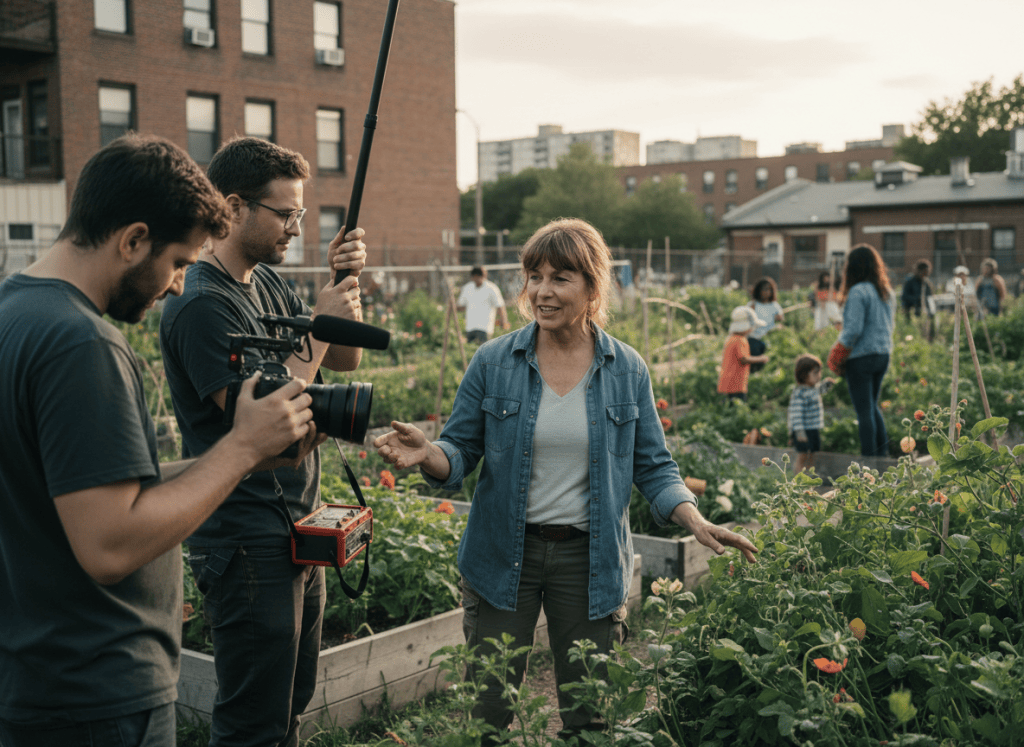
A focused documentary asks something specific. For example: How is one neighborhood garden changing access to fresh food? How does an artisan preserve a disappearing craft? What does a community leader see changing in the place they serve? The question should guide the interviews and every piece of B-roll.
What to Gather
- A real primary subject and their permission to be featured.
- Verified names, dates, places and factual claims.
- Interview questions tied to the central theme.
- B-roll that shows the subject doing the work being discussed.
- Ambient audio, room tone and location details.
Film Structure
- Open with the subject in the real environment.
- Introduce the person and central question.
- Pair interview excerpts with relevant B-roll.
- Show a challenge, change or insight supported by observable details.
- End with a reflective conclusion and final visual.
Camera, Interview & B-Roll Direction
- Use natural lighting and restrained camera movement.
- Let the interview subject speak in complete thoughts; avoid over-editing meaning.
- Match B-roll to what the speaker is actually discussing.
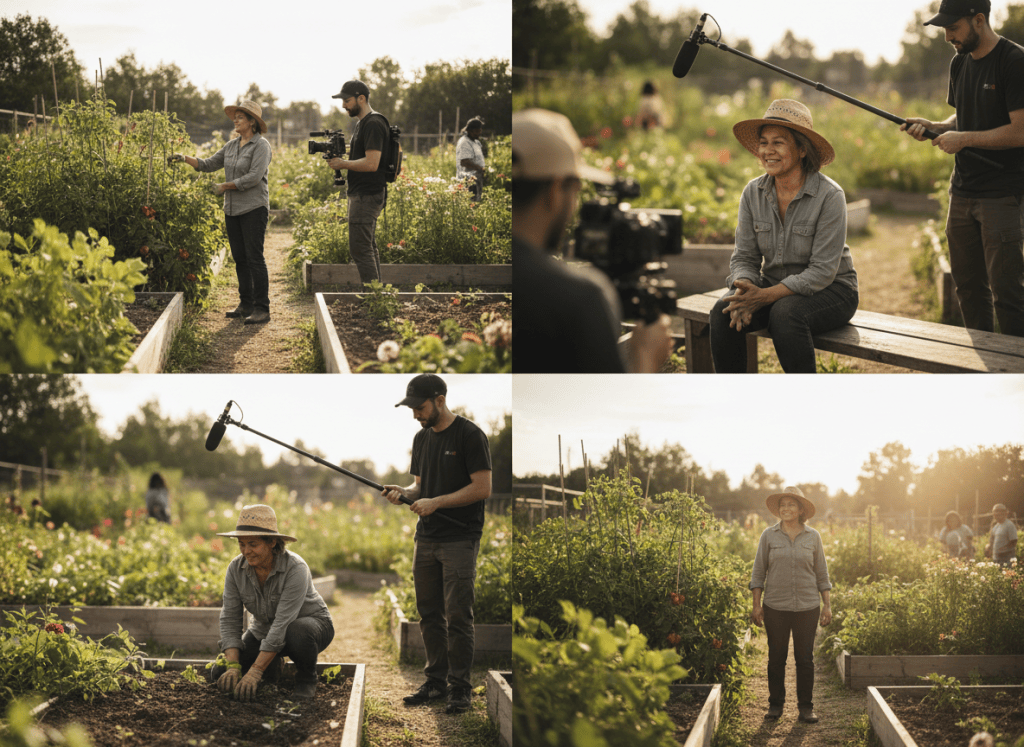
- Use establishing shots, hands-at-work details, environmental cutaways and room tone.
- If a reenactment is used, label it clearly rather than presenting it as documentary footage.
Build the Documentary from Evidence, Not from Fictional Scene Beats
Documentary scenes build on one another differently from fiction. The continuity is not only visual—it is factual. Each section should inherit what has already been verified, clarify the central question, and add evidence, testimony or observation without asking Film Studio to invent what happened.
Use an Evidence-to-Scene Map
| Section | What You Need Before Editing | What the Scene Adds | What Comes Next |
|---|---|---|---|
| 1 · Establish | Verified subject, place and central question | Show the real environment and activity | Introduce whose experience will guide us |
| 2 · Interview | Recorded statement in context | Give the subject’s explanation or perspective | Identify what needs to be shown or checked |
| 3 · B-Roll | Real activity connected to the interview | Let viewers observe the process or place | Move from claim to evidence or lived detail |
| 4 · Challenge / Change | Verified problem, history or turning point | Add complexity rather than manufactured conflict | Ask what changed and why |
| 5 · Reflection | What the reporting actually supports | Return to the subject or environment with new understanding | End without overstating what was proven |
Documentary Continuity Means Factual Continuity
- Subject lock: keep names, roles, relationships and identifying details exactly as verified.
- Timeline lock: track when each interview and event occurred. Do not edit different dates together in a way that falsely implies they happened at the same moment.
- Place lock: identify locations accurately and do not use visually similar footage as though it documents the actual place.
- Quote lock: preserve the meaning of what the subject said. Do not manufacture a cleaner quote that was never spoken.
- Evidence lock: once a statistic, date or claim is used, keep the sourced value consistent throughout the film and re-check it before publication.
Build B-Roll on Top of the Interview
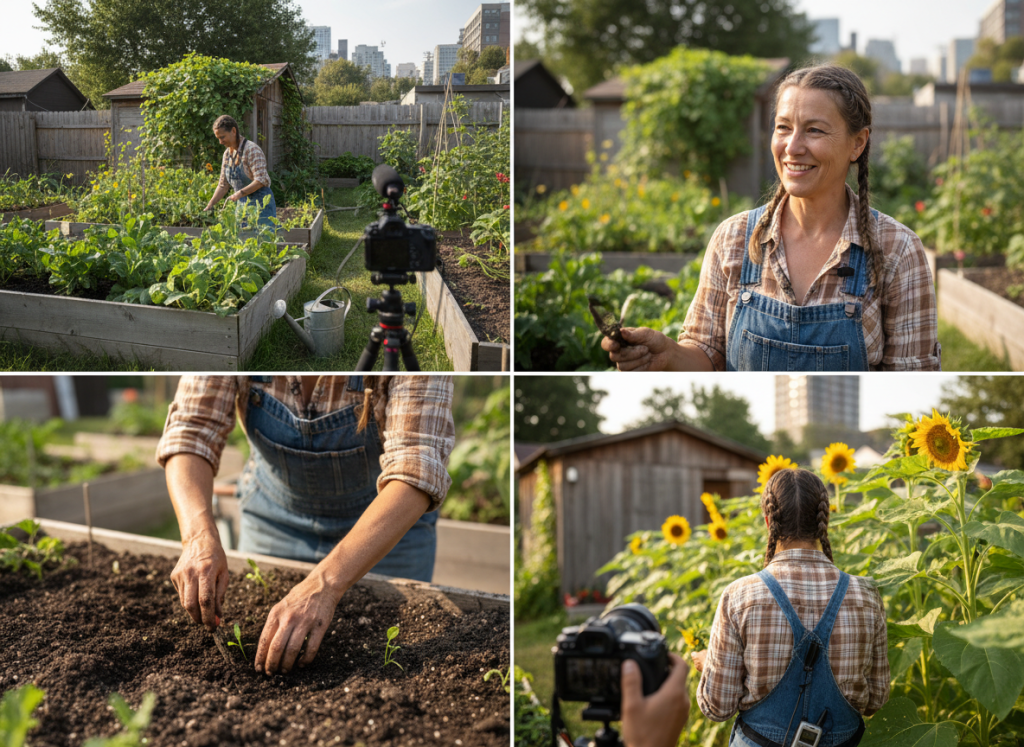
After an interview, make a simple coverage list from the subject’s actual statements. If the subject discusses planting, film hands planting, tools, soil, rows and the surrounding garden. If the subject discusses a change over time, look for dated photographs, records, locations or follow-up interviews that can support that history. B-roll should clarify or observe the statement—not merely decorate it.
- Transcribe the interview and highlight the strongest complete thoughts.
- For each selected statement, write the visual evidence or observational footage that could accompany it.
- Mark any sentence that contains a factual claim requiring verification.
- Record ambient sound and detail shots in the same environment.
- Build the rough scene from real interview + real B-roll first; add music, titles and stylistic polish after the factual structure works.
Separate Facts from Film Instructions in the Prompt
A useful documentary prompt has two clearly different parts. First, provide verified material supplied by you: subject name, role, location, dates, approved interview excerpts and confirmed facts. Second, provide the film instructions: pacing, shot types, B-roll order, transition style, music restraint and ending structure. Film Studio can organize and visualize supplied information; it should not be asked to fill factual gaps with plausible-sounding details.
Ask Interview Questions that Open the Story
- Prefer “What changed?” or “Walk me through what happened” over questions that contain the desired answer.
- Ask for specific examples after broad statements.
- Ask what the subject saw, did or experienced directly, then distinguish that from what they heard from someone else.
- Allow pauses; do not rush to fill silence.
- Record follow-up questions when a claim needs context, dates or clarification.
Use AI or Reenactments Transparently
If you use generated imagery, illustrative reconstructions or reenactments, do not present them as authentic documentary footage of an event that was not actually recorded. Label illustrative material clearly and avoid generating a real person doing or saying something they did not do or say. The audience should be able to distinguish documentation from illustration.
Common Documentary Mistakes
- Asking Film Studio to invent statistics, dates, quotes or background facts to make the story feel complete.
- Using beautiful B-roll that does not actually support the interview statement beside it.
- Cutting a quote so aggressively that its original meaning changes.
- Mixing footage from different days or places without making the chronology understandable.
- Using reenactment or generated visuals without telling viewers what they are.
- Forcing a dramatic conclusion that the available evidence does not support.
Expand a Short Documentary into a Longer Film
Expand by creating evidence-based chapters, not fictional subplots. For each chapter, define one question, the people qualified to answer it, the documents or observations that can support it, and the B-roll needed to make it visible. A longer structure might move from the subject’s present-day work → personal history → community context → challenge → change over time → competing perspectives → present-day outcome → reflection. Every new chapter should add verified understanding to the same central question.
DOCUMENTARY STRATEGY
Do Not Let the Prompt Invent the Evidence
For documentary work, supply verified facts yourself. Use Film Studio to shape structure, visual coverage and pacing — not to manufacture quotes, statistics, dates or events.
Copy This Film Studio Prompt
Create a short documentary film in ShiMuv Film Studio about a real-world community subject. Use an authentic observational style rather than fictional drama. Structure the film around one clear question, a primary interview subject and supporting visual evidence. Create 5 connected sections: open with an establishing scene that shows the subject in their real environment; introduce the person and the central question; use interview moments paired with relevant B-roll of their work or community; show a challenge, change or insight supported by observable details; end with a reflective conclusion and a final image that reinforces the documentary’s theme. Use natural lighting, restrained camera movement, realistic locations, interview audio, room tone, cutaway footage and simple music. Do not invent statistics, quotes, names, dates or factual claims that were not supplied by the creator. Mark any illustrative reenactments clearly as reenactments. Keep the tone human, credible and respectful.TRY THIS IN SHIMUV