FILM STUDIO ROMANCE TUTORIAL
Romantic drama becomes believable when the characters share history, hesitation and emotional stakes. Give Film Studio a reason for the reunion and let silence, eye contact and timing do some of the storytelling.
Story Concept
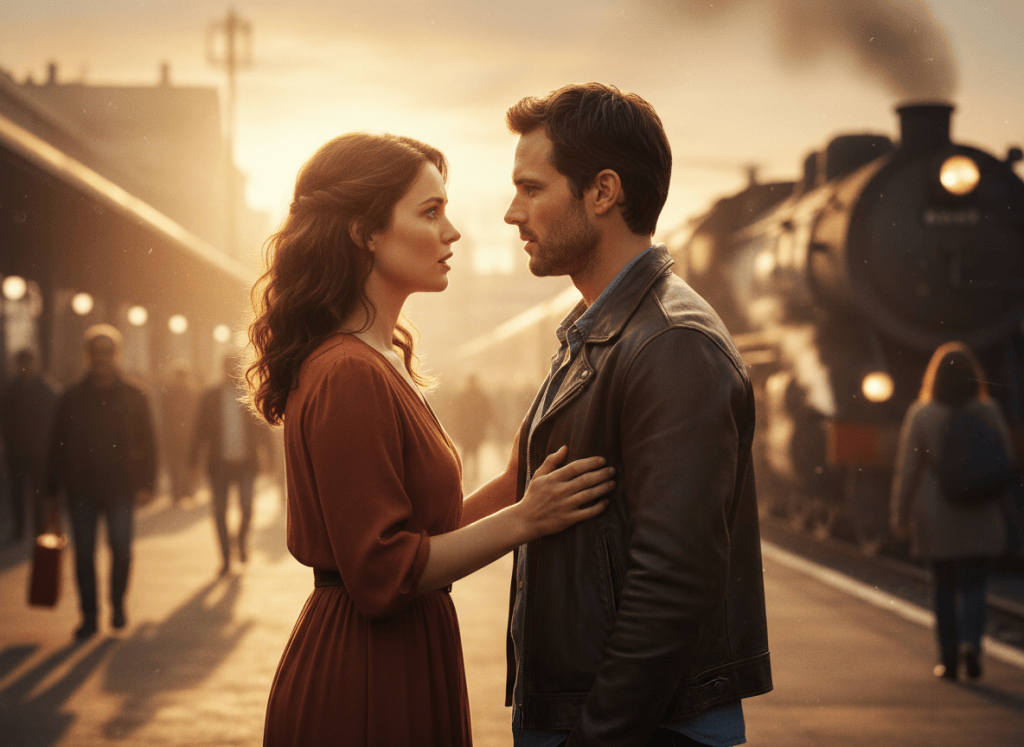
Elena and Daniel unexpectedly see each other at a train station years after their relationship ended. Their brief conversation reopens feelings neither of them fully resolved and forces them to decide whether the moment is closure or a second beginning.
Build Your Characters
- Elena — warm, capable and guarded.
- Daniel — thoughtful, regretful and sincere.
- The station itself — use arrivals and departures as a visual metaphor.
Scene Plan
- They arrive separately.
- They recognize each other across the station.
- A careful conversation begins.
- One admits what was never said.
- The train arrives and the future remains open.
Visual & Camera Direction
- Use warm backlight and intimate close-ups.
- Let pauses and eye contact carry emotional weight.
- Use wider frames to show distance before bringing the characters closer.
- Keep the ending quiet and emotionally specific.
Build the Romance from Emotional Continuity
Romance is not only character continuity—it is relationship continuity. Elena and Daniel should carry the memory of every look, hesitation and admission into the next scene. If Scene 2 creates vulnerability, Scene 3 cannot behave as though that conversation never happened.
Track What Each Person Knows and Feels
| Scene | Carry Forward | Emotional Change | Exit Beat |
|---|---|---|---|
| 1 · Recognition | Shared history, station, established wardrobe | Surprise interrupts their separate plans | They choose whether to approach |
| 2 · Small Talk | Awkward recognition and past history | Politeness gives way to genuine curiosity | One asks a personal question |
| 3 · Truth | What has already been admitted | Regret or unresolved feeling becomes explicit | Silence forces a choice |
| 4 · Decision | Vulnerability from Scene 3 | One person risks honesty | The train arrives |
| 5 · Payoff | Entire emotional journey | They choose closure, reconnection or possibility | End on action, not only words |
Continuity Includes Body Language
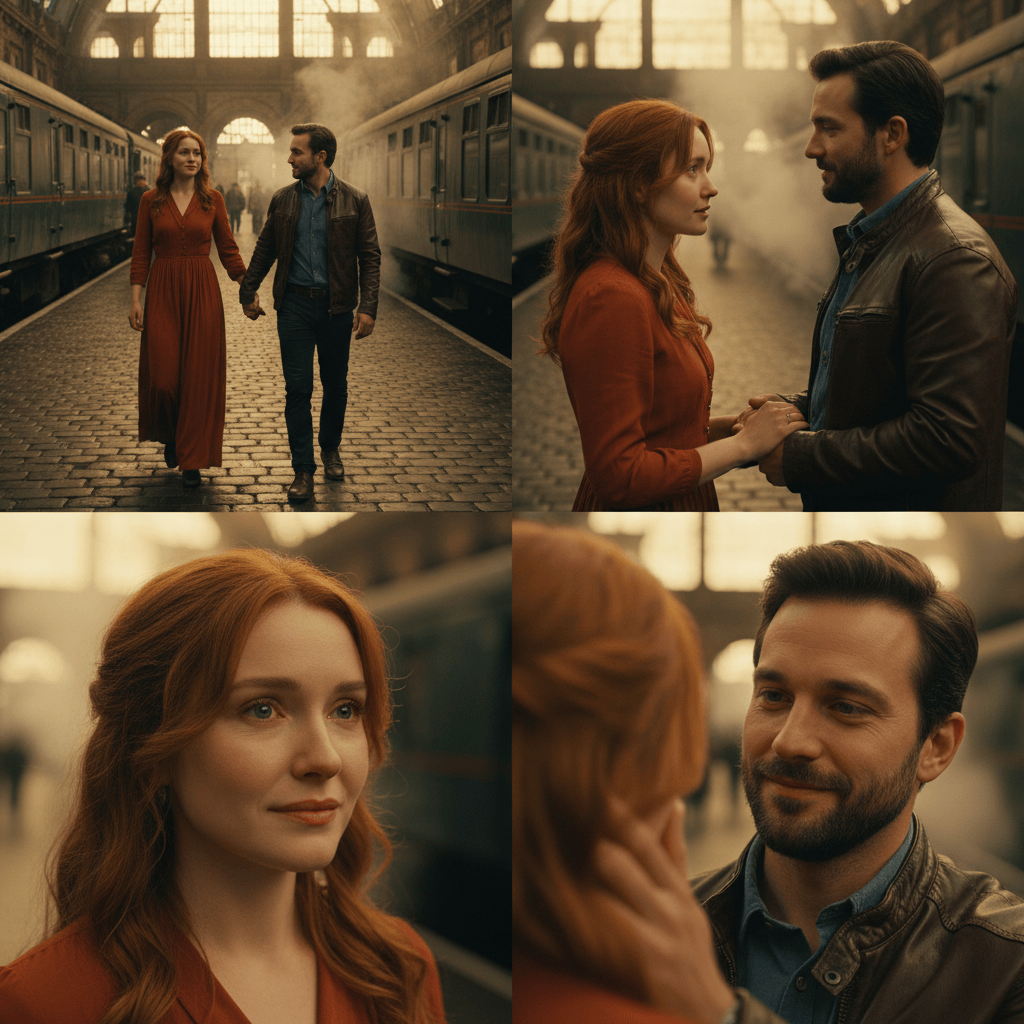
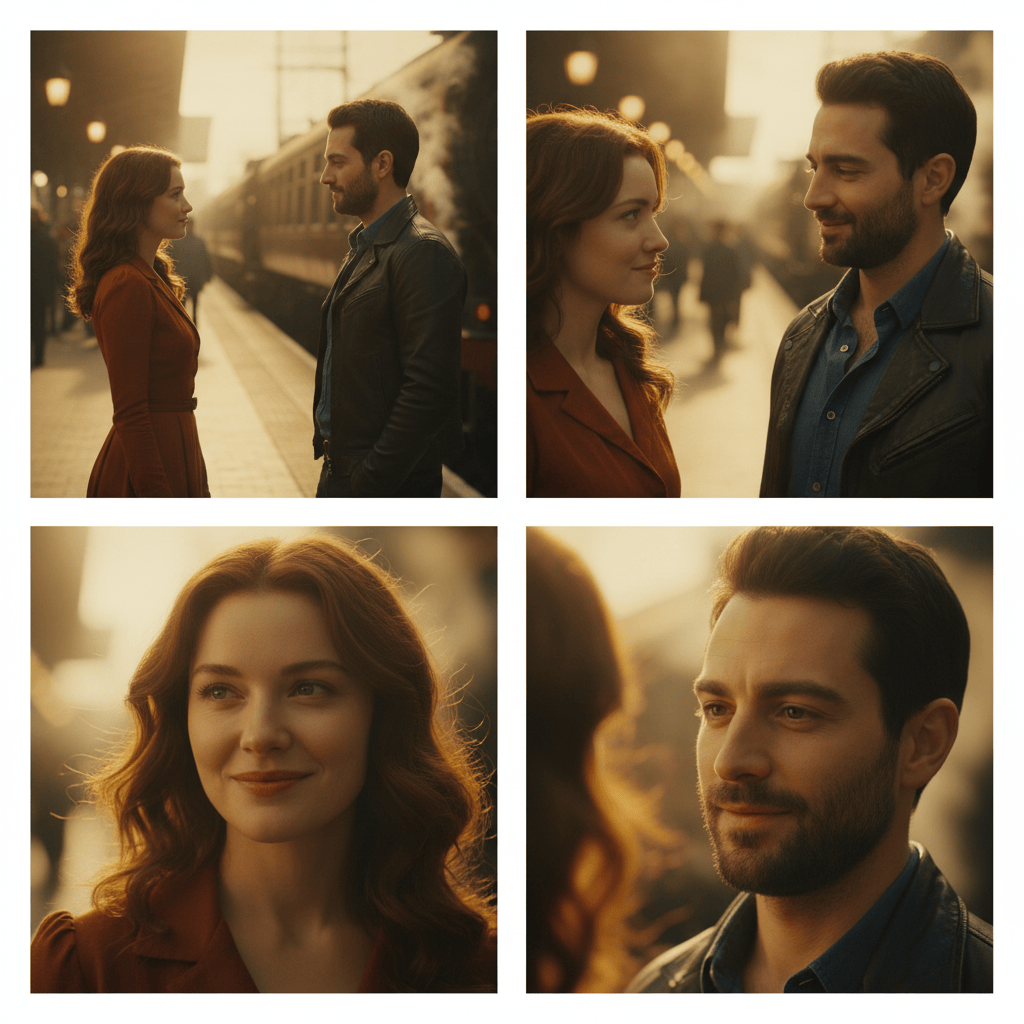
- Identity lock: preserve faces, hair, age range and wardrobe throughout the continuous station sequence.
- Distance lock: physical closeness should change with the relationship. Start farther apart, then let framing and blocking move them closer as trust returns.
- Prop lock: luggage, tickets, coat, scarf or phone should stay consistent and can become meaningful handoff objects.
- Emotion lock: write the starting emotion of each scene from the ending emotion of the previous one.
- History lock: once a shared memory is mentioned, later dialogue can refer back to it rather than introducing a completely new backstory.
Build Dialogue in Layers
- Begin with safe language: travel, work, time, weather, why they are at the station.
- Move to personal observation: “You still do that when you’re nervous.”
- Open the past: one specific memory or regret.
- Allow a pause or reaction before the next line—do not make every feeling verbal.
- Let the final scene turn words into a choice: stay, leave, exchange a number, board together or part differently than before.
Use Shot Distance to Tell the Relationship Story
- Wide frame: they notice each other across physical distance.
- Medium two-shot: they agree to talk.
- Over-the-shoulder shots: guarded dialogue and memory.
- Close-ups: truth, regret and the moment one person risks honesty.
- Final wider shot: show the choice in relation to the arriving train and the world around them.
Common Romance Mistakes
- Jumping from surprise reunion to declaration of love without rebuilding trust.
- Using a different emotional tone in each generated scene.
- Changing wardrobe or station lighting during a conversation that is supposed to be continuous.
- Giving both characters the same voice instead of distinct ways of avoiding or confronting emotion.
- Ending only with dialogue when a visible action can make the emotion more cinematic.
Expand the Reunion into a Longer Film
Extend the story through memory and consequence, not repeated conversations. Add scenes that reveal why they separated, how each person changed, what they are risking now, and what the train journey represents. The longer version still needs one central question: Are they meeting to close the past or begin again?
FILM STUDIO STRATEGY
Give the Romance a Past
A reunion feels richer when Film Studio knows what the characters lost, what they still want and what must change by the final scene.
Copy This Film Studio Prompt
Create a romantic drama short film in ShiMuv Film Studio about two former lovers unexpectedly reuniting years later. Main characters: Elena, warm but guarded, wearing a coat and scarf; Daniel, thoughtful, carrying regret and longing. Setting: a train station during golden hour with warm sunlight, soft background movement and a cinematic atmosphere. Create 5 connected scenes: Elena and Daniel arrive separately; they notice each other and pause; they talk about time, regret and what changed; one admits the feeling that was never said aloud; the train arrives or departs and leaves their future open but emotionally changed. Include intimate close-ups, natural pauses, eye contact, consistent wardrobe and character identity, gentle music, realistic dialogue, and subtitle-ready dialogue.TRY THIS IN SHIMUV